Light before subject.
Before choosing what to place in a photograph, take a moment to notice what the light is doing.
Look for direction
A bright room does not contain the same light everywhere. Near a window, one side of an object may be illuminated while the other falls into shadow. A doorway can make a narrow band of brightness. A wall can reflect a softer version of the light that reaches it.
Moving a little can change the relationship between these areas. Instead of searching immediately for an interesting subject, first look for an interesting patch of light. Then see what already belongs there.
Follow the edges
The boundary between light and shadow gives a frame structure. It can divide the image, lead the eye or create a pause around an object. Hard edges and soft edges have different moods; neither is automatically better. Choose the one that suits the feeling you want to explore.
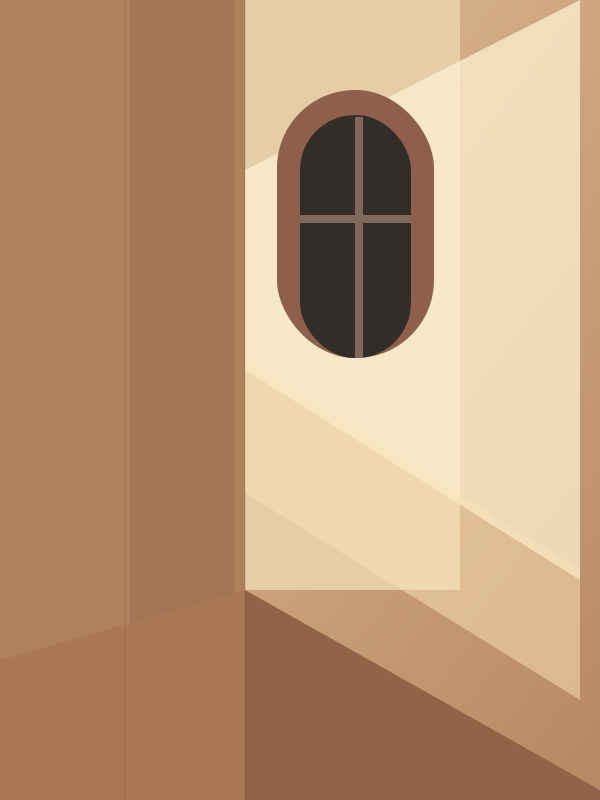
In the architectural study, the diagonal patch of brightness gives the otherwise still scene a sense of movement. The window supplies a second, quieter shape. The interest comes from their relationship rather than from a large number of objects.
Return to the same place
Try observing one familiar place at different times. Note which parts become brighter, where a shadow moves, and how colours appear to change. You can make this exercise with a camera, a sketchbook or simply a few written notes.
The aim is to develop attention. A familiar place becomes more interesting when you stop expecting it to look exactly as it did the last time.
Explore the journal